The Ngorongoro Conservation Area (809,440 ha) spans vast expanses of highland plains, savanna, savanna woodlands and forests, from the plains of the Serengeti National Park in the north-west, to the eastern arm of the Great Rift Valley.
The area was established in 1959 as a multiple land use area, with wildlife coexisting with semi-nomadic Maasai pastoralists practising traditional livestock grazing. It includes the spectacular Ngorongoro Crater, the world’s largest caldera, and Olduvai Gorge, a 14km long deep ravine.
The property has global importance for biodiversity conservation in view of the presence of globally threatened species such as the black Rhino, the density of wildlife inhabiting the Ngorongoro Crater and surrounding areas throughout the year, and the annual migration of wildebeest, zebra, Thompson’s and Grant’s gazelles and other ungulates into the northern plains.
The area has been subject to extensive archaeological research for over 80 years and has yielded a long sequence of evidence of human evolution and human-environment dynamics, collectively extending over a span of almost four million years to the early modern era. This evidence includes fossilized footprints at Laetoli, associated with the development of human bipedalism, a sequence of diverse, evolving hominin species within Olduvai gorge, which range from Australopiths such as Zinjanthropus boisei to the Homo lineage that includes Homo habilis, Homo erectus and Homo sapiens; an early form of Homo sapiens at Lake Ndutu; and, in the Ngorongoro crater, remains that document the development of stone technology and the transition to the use of iron.
The overall landscape of the area is seen to have the potential to reveal much more evidence concerning the rise of anatomically modern humans, modern behavior and human ecology.
Ngorongoro Conservation Area has yielded an exceptionally long sequence of crucial evidence related to human evolution and human-environment dynamics, collectively extending from four million years ago to the beginning of this era, including physical evidence of the most important benchmarks in human evolutionary development. Although the interpretation of many of the assemblages of Olduvai Gorge is still debatable, their extent and density are remarkable. Several of the type fossils in the hominin lineage come from this site. Furthermore, future research in the property is likely to reveal much more evidence concerning the rise of anatomically modern humans, modern behavior and human ecology.
The stunning landscape of Ngorongoro Crater combined with its spectacular concentration of wildlife is one of the greatest natural wonders of the planet. Spectacular wildebeest numbers (well over 1 million animals) pass through the property as part of the annual migration of wildebeest across the Serengeti ecosystem and calve in the short grass plains which straddle the Ngorongoro Conservation Area/Serengeti National Park boundary. This constitutes a truly superb natural phenomenon.
Ngorongoro crater is the largest unbroken caldera in the world. The crater, together with the Olmoti and Empakaai craters are part of the eastern Rift Valley, whose volcanism dates back to the late Mesozoic / early Tertiary periods and is famous for its geology. The property also includes Laetoli and Olduvai Gorge, which contain an important palaeontological record related to human evolution.
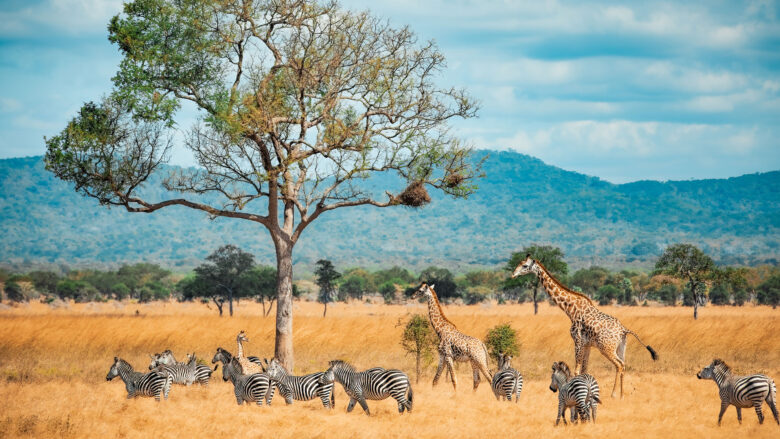
The variations in climate, landforms and altitude have resulted in several overlapping ecosystems and distinct habitats, with short grass plains, highland catchment forests, savanna woodlands, montane long grass plains and high open moorlands. The property is part of the Serengeti ecosystem, one of the last intact ecosystems in the world which harbours large and spectacular animal migrations.
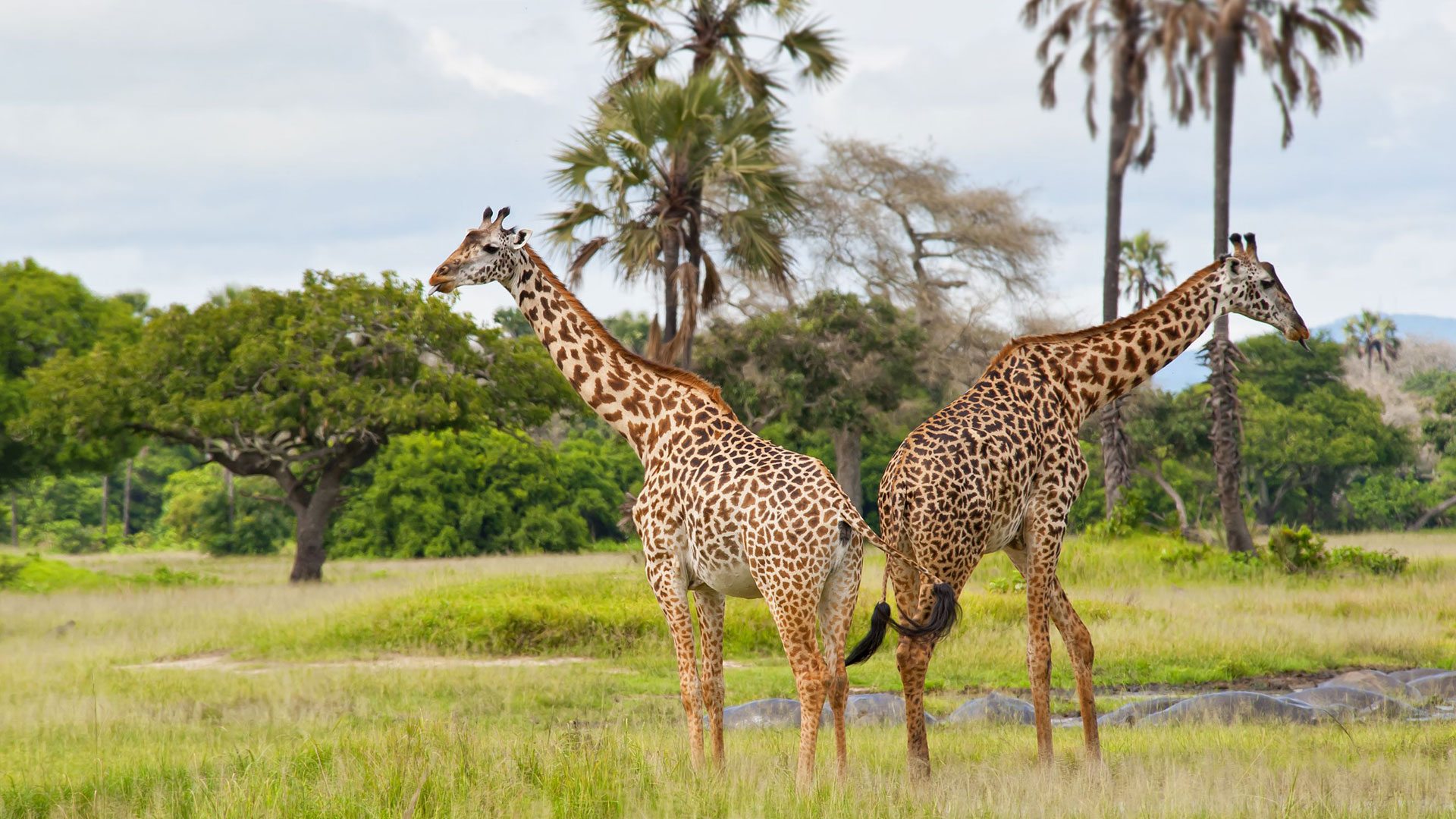
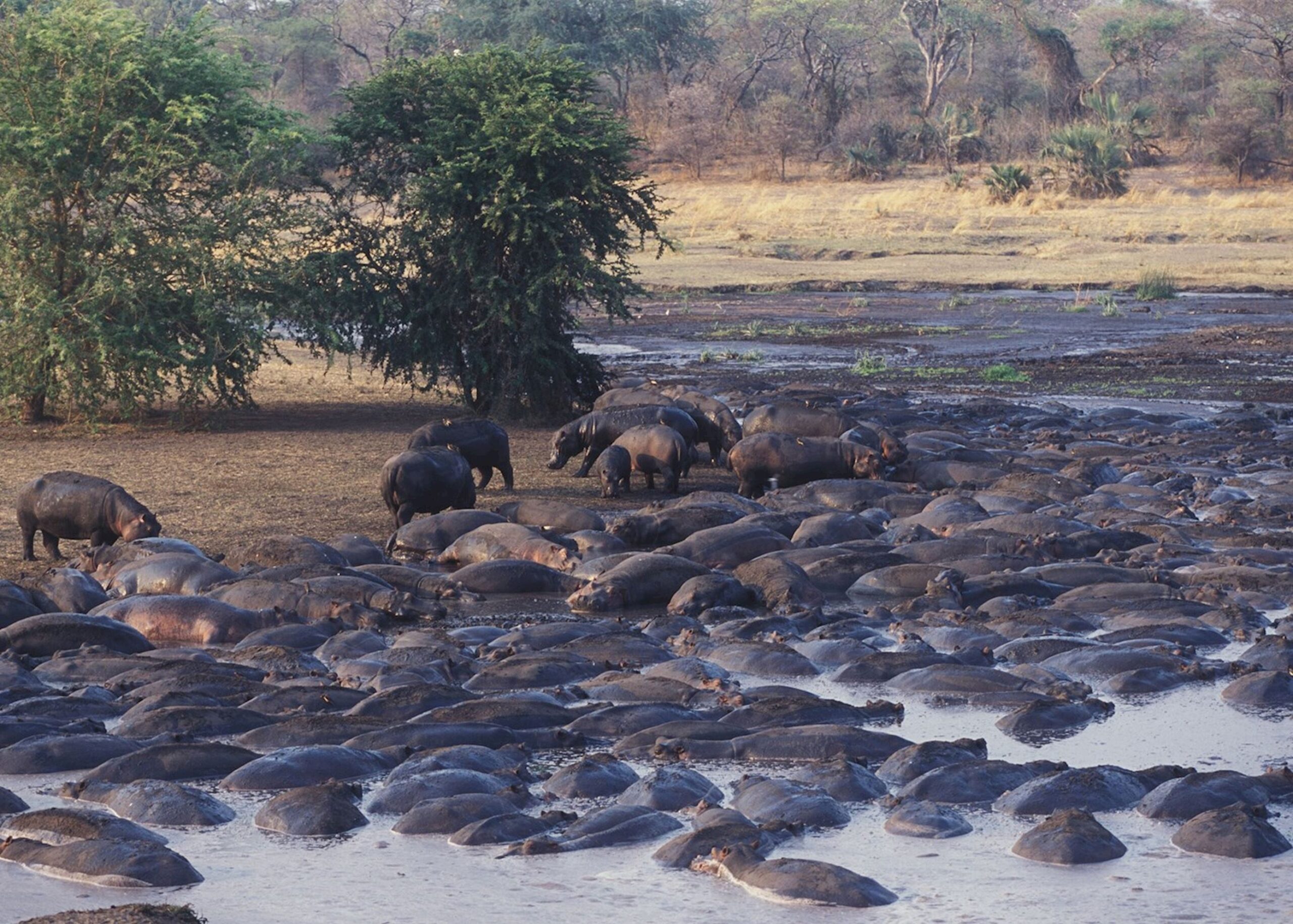
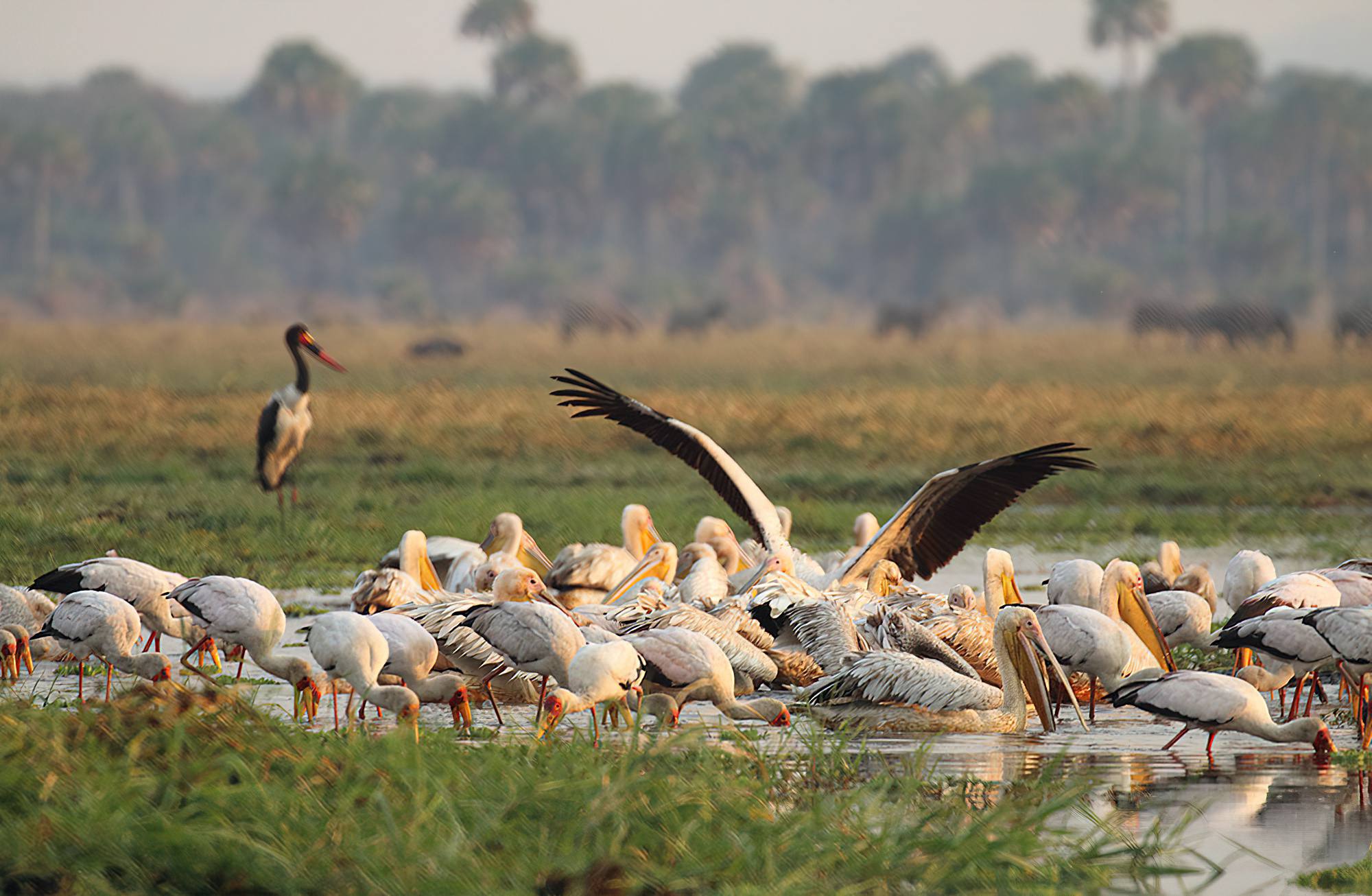
Ngorongoro Conservation Area is home to a population of some 25,000 large animals, mostly ungulates, alongside the highest density of mammalian predators in Africa including the densest known population of lion (estimated 68 in 1987). The property harbours a range of endangered species, such as the Black Rhino, Wild hunting dog and Golden Cat and 500 species of birds. It also supports one of the largest animal migrations on earth, including over 1 million wildebeest, 72,000 zebras and c.350,000 Thompson and Grant gazelles.